
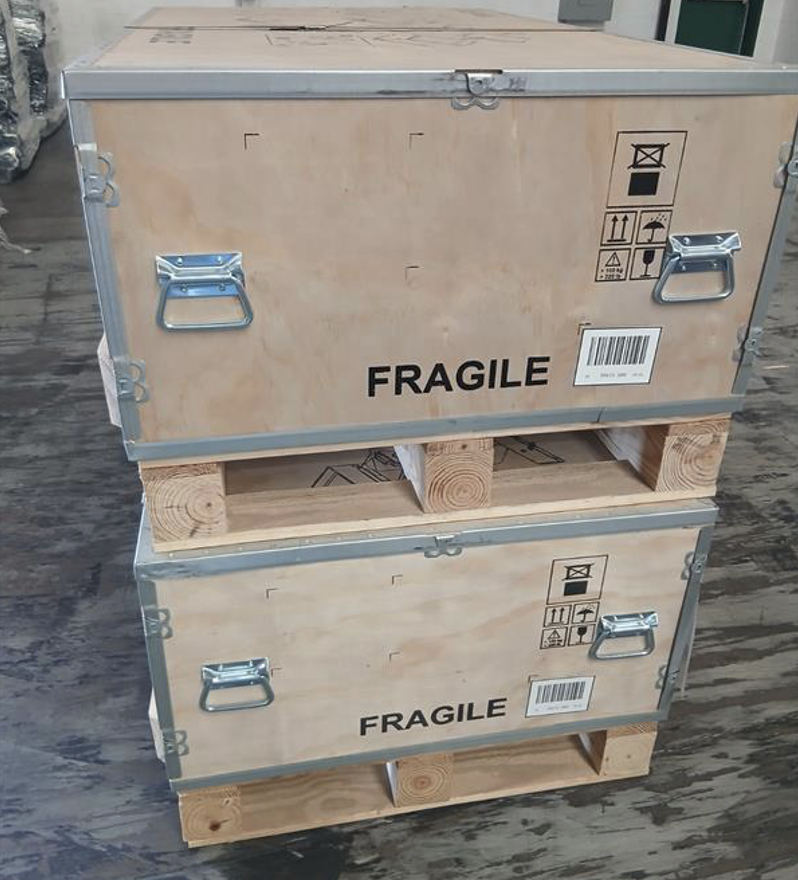
Server racks headed into data centers can weigh anywhere from 2,500 to 10,000 pounds. Each one is custom built for a specific end user, and each is expected to arrive ready to plug in and power up without delay. That is the standard: unload the rack, plug it in, and everything should already be in working order.
The crate surrounding that equipment often goes unnoticed. That crate carries more responsibility than is typically recognized, and whether it is engineered correctly can determine whether a delivery goes smoothly or becomes a costly problem.
A Built-In Tension
Packaging engineers typically have access to critical product information and dimensions from the outset. Confidentiality still shapes the process, however: companies building out data centers guard proprietary details closely, for understandable reasons, and that can limit how much an engineer learns about a product’s tolerances beyond its basic specifications.
How much shock can the equipment absorb? What vibration will it tolerate during transport? These are not minor details. They influence decisions ranging from what cushioning materials are used to how the load is braced inside the crate.
Simultaneously, customers generally know their own product, and what the crate they are paying for looks like. What they often lack is the technical background to understand why a given crate design may be failing to protect that product. The result is a gap in which either side can miss critical details in the requirements. Specifications handed off do not always match what is needed, and that gap widens further when overseas manufacturing and translation are added to the process.
Cost pressure compounds the issue. Manufacturing decisions often favor the cheapest available option, which can mean lower-grade plywood or weaker fasteners make their way into the build. Those decisions are rarely disclosed upfront. They tend to surface only after something has already failed.
What Failure Looks Like
A poorly engineered crate tends to reveal itself through shifting hardware, torn plywood, or vibration damage that only becomes apparent after a long transit. Moisture is another common failure point: equipment meant to stay isolated from humidity will not remain that way if the crate was not built with that requirement in mind. None of this is abstract. Each failure translates into rework, wasted labor, and a missed delivery window that ripples down the entire supply chain.
Making Our Work Together Easier
The single most valuable step a customer can take is straightforward: bring the packaging engineer in early, before specifications are finalized.
Several additional practices make the process considerably smoother:
Share accurate information about the product
How fragile is it? What can it withstand? This is the most useful input a customer can provide, and it is also the detail that confidentiality most often obscures.
Clarify stages of decision making
Is the customer still exploring options, or is the requirement already defined? Either is workable, but the engineer needs to know which conversation is taking place.
Work within standard rack sizes wherever possible
This does not mean sacrificing engineering rigor. In practice, roughly 80 percent of a crate design can often be reused as a foundation, with the remaining details engineered specifically around the product being shipped. That approach saves time and cost without compromising protection.
Provide a checklist upfront
How many sides of the crate require access? What tools will be available when the servers are unloaded? What conditions will the shipment encounter during transport? What is the nature of the destination environment? The more of this information is available at the outset, the fewer rounds of revision the process requires.
Land on One Crate
The key is to identify a crate design that consistently performs as intended and commit to it, avoiding an endless cycle of redesign and iteration. When customers share accurate product specifics and crate requirements with the engineer, the result is a crate that arrives ready, every time.
Let’s build something better together. Contact SPG to explore engineered crate solutions designed for your data center’s specific needs. https://spgpackaging.com/contact/