
Traditionally, packaging has been considered a simple necessity, something designed to protect products during shipping and storage, and subsequently discarded. Today, that perspective is changing. As businesses face more pressure to improve sustainability, reduce waste and strengthen supply chain efficiency, packaging has become a much more strategic consideration.
The Single-Use Packaging Challenge
The reality is that most packaging still follows a linear lifecycle: produce, use and discard. Globally, most packaging materials are used only once before they are thrown away. This approach creates significant environmental challenges and generates unnecessary costs for businesses across almost every industry.
Packaging waste includes more than plastic consumer packaging. Corrugated materials, wood pallets, foam inserts, metals and industrial protective materials all contribute to these growing waste streams. For companies managing high shipping volumes, inefficient packaging increases transportation costs, storage demands and material expenses. Moreover, it creates a massive and avoidable environmental impact.
As consumers prioritize sustainability, regulators and investors are forcing businesses to rethink how packaging is designed, used and recovered. Increasingly, the answer lies in circular packaging systems.
Circular Packaging in Practice
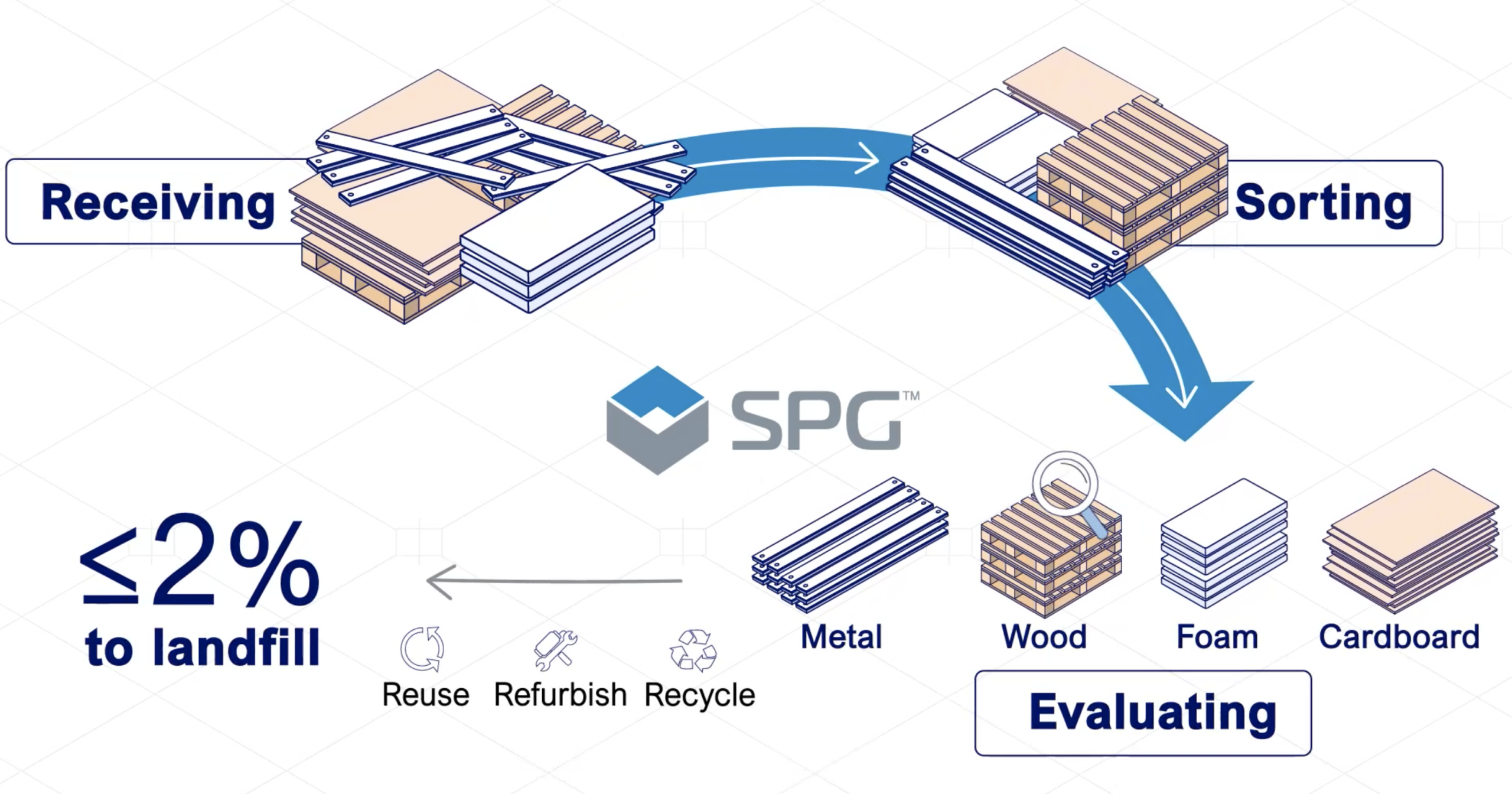
Unlike traditional disposable packaging, circular packaging is designed to remain in use for as long as possible. The goal is to create systems that minimize waste while maximizing long-term value. In these systems, packaging materials are collected after use, reprocessed and manufactured into new packaging products rather than being discarded or downgraded into lower-value applications.
In practice, circular packaging can take many forms depending on the industry. In data center and hyperscale environments, servers and networking equipment are often shipped in highly protective packaging that is discarded immediately after installation. Redesigning those solutions for reuse can significantly reduce waste while maintaining strict product protection standards.
In automotive manufacturing, reusable transport packaging systems can help suppliers reduce single-use materials for parts shipments. Industrial manufacturers have also adopted durable packaging systems capable of surviving dozens or even hundreds of shipping cycles, which dramatically reduces material consumption over time.
Closing the Loop Through Recovery and Recycling
At its core, circular packaging is the idea that materials should remain in circulation rather than become waste. Closed-loop recycling systems are instrumental in making this possible.
When designed effectively, circular systems can produce measurable environmental results. Some manufacturers operating closed-loop recovery programs have achieved landfill avoidance rates approaching near-zero waste levels through strong recovery infrastructure and supplier collaboration.
The Business Advantages of Circular Packaging
Beyond the environmental benefits, circular packaging also presents a compelling business case. Reusable packaging systems can lower long-term material costs by reducing the need for constant replacement purchases. Optimized packaging designs often improve freight efficiency by reducing excess weight and empty shipping space.
Sustainability itself has become a competitive advantage. Customers and business partners increasingly expect companies to demonstrate meaningful environmental progress, and packaging is one of the most visible ways organizations can showcase those efforts.
Perhaps most importantly, circular packaging strengthens supply chain resilience. Businesses that reduce dependence on single-use materials are often better equipped to manage material shortages, fluctuating raw material costs and shifting regulatory requirements.
Preparing for the Future of Packaging
The transition to circular packaging does not require businesses to completely reinvent their operations overnight. In many cases, incremental changes in packaging design, material selection and recovery processes can produce meaningful improvements over time.
Early adopters of circular strategies may be better positioned to comply with evolving regulations related to recyclable content, packaging recovery and waste reduction. The companies that embrace circular packaging now will not only reduce environmental impact, but also position themselves more competitively in a marketplace increasingly shaped by sustainability expectations.
Packaging is increasingly becoming central to how businesses reduce waste, improve efficiency and prepare for the future. The future of packaging is circular, and the industries that recognize that shift early will be best positioned to lead.
By Paul Budsworth