
From PET to rPET: Advancing Circularity in Data Center Protective Packaging
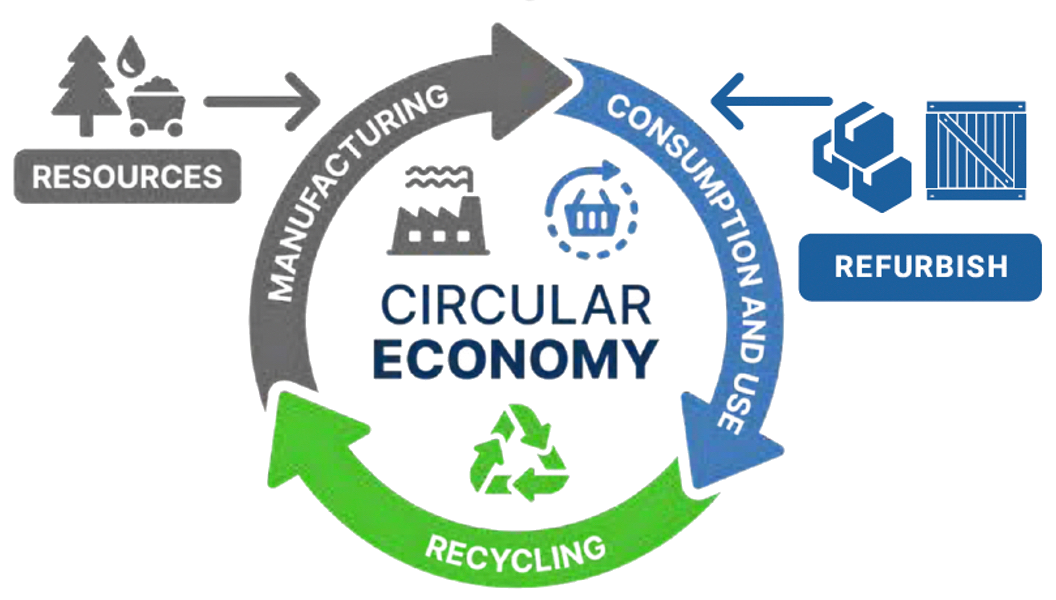
What is circularity? At its core, circularity is the practice of designing systems so materials remain in use for as long as possible. Instead of the traditional linear model of take, make, and dispose, a circular approach prioritizes reuse, refurbishment, and recycling. In packaging, that means engineering materials and logistics systems so they do not become waste after a single shipment.
In the world of data center supply chains, circularity is more than a sustainability goal. It is an operational strategy. As hyperscale growth accelerates and server infrastructure becomes more capital-intensive, packaging must protect high-value equipment while reducing landfill waste, material volatility, and total landed cost. One of the most promising tools in that effort is the shift from PET to rPET.
Recycled PET Is Moving Beyond Bottles
Polyethylene terephthalate, or PET, is widely used in packaging due to its strength, clarity, and dimensional stability. Its recycled counterpart, rPET, is produced from post-consumer sources, such as cleaned beverage bottles, which are reprocessed for reuse. While rPET has long been common in consumer packaging, it is now gaining traction in industrial and technology applications, including protective packaging for data center equipment.
This shift is directly tied to circularity. rPET reduces dependence on virgin resin and gives post-consumer plastics a second life in high-performance applications. However, moving from PET to rPET is not simply a material substitution. It requires alignment across design, sourcing, testing, and reverse logistics.
For packaging engineers and sustainability leaders, the question is no longer whether rPET can perform. The question is how to scale it reliably within a demanding supply chain.
What Circularity Means in the Data Center Supply Chain
Data center supply chains are complex. Servers, racks, and integrated systems move between OEMs, integrators, colocation facilities, and hyperscalers. Packaging must withstand vibration, compression, and long transit routes. It must also support efficient unloading, stacking, and storage.
Traditionally, much of this packaging has been expendable. Wood crates, foam cushioning, and corrugated kits are often discarded after installation. This creates landfill waste and recurring capital expense.
Circularity changes this model. In a circular data center packaging system, materials are designed to be reused, refurbished, or recycled through controlled loops. rPET plays a key role because it can be thermoformed into trays, clamshells, and protective inserts that deliver strength while incorporating recycled content.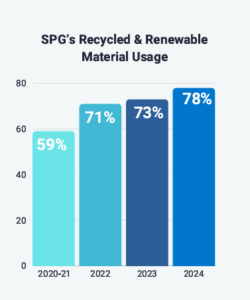
Still, rPET introduces challenges that must be engineered carefully.
Barriers to Adoption in High-Performance Applications
Despite its environmental advantages, rPET presents technical considerations in industrial settings.
- Mechanical properties may shift over multiple recycling cycles. Strength and flexibility must be validated through testing before deployment in load-bearing or impact-sensitive applications.
- Availability and cost volatility can also impact procurement strategies. Fragmented recycling streams may introduce supply risk if sourcing is not controlled.
These realities reinforce an important point about circularity in data center packaging. It cannot rely solely on open-loop recycling.
Designing for Circular Performance
Scaling rPET requires packaging systems that are engineered for recovery.
Design strategies include minimizing multi-material blends that complicate recycling, using clear resin identification codes, and creating modular components that can be disassembled or refurbished. Packaging must also be validated for stacking strength, vibration resistance, and long-distance transport.
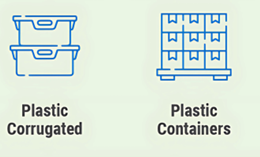
rPET is one important substrate among several sustainable options. Polypropylene offers durability for reusable totes. HDPE provides impact resistance for rigid containers. Molded pulp delivers compostable cushioning. Each material has advantages and trade-offs. The correct selection depends on durability requirements, recovery pathways, and total supply chain impact.
How SPG Leads in Data Center Packaging Circularity
As PET transitions to rPET in more protective applications, the opportunity is clear. With the right design, sourcing, and recovery strategy, circular packaging can deliver measurable environmental and operational value at scale.
By combining material science with system-level thinking, SPG enables customers to reduce virgin plastic use, lower their carbon impact, and maintain protection standards for high-value infrastructure.
SPG approaches circularity as an engineered system, not a marketing initiative. Our vertically integrated capabilities allow us to design, test, manufacture, and recover packaging solutions within controlled networks.
Circularity in the data center supply chain is not about a single material. It is about building packaging systems that protect equipment, control cost, and keep materials in motion.