
What is circularity, and why does it matter when selecting packaging substrates for data centers?
Circularity is the practice of designing systems so materials remain in productive use rather than becoming waste. Instead of the traditional linear model of extract, use, and dispose, a circular approach prioritizes reuse, recovery, refurbishment, and responsible recycling. In data center packaging, circularity means selecting substrates that not only protect high-value equipment during transit but also align with end-of-life recovery pathways and broader ESG commitments.
For data centers, the shift toward circularity is not only about using less material. Choosing the right materials from the start and designing packaging systems that work within real-world recycling infrastructure ensures that performance and sustainability move together.
Circularity in the Data Center Supply Chain
Data center supply chains are demanding. Servers, racks, and integrated systems are heavy, sensitive, and often transported globally. Packaging must withstand vibration, compression, stacking, and long-haul transit. At the same time, sustainability mandates are pushing organizations to reduce landfill waste, increase recycled content, and improve traceability.
In this environment, recyclable substrates play a central role. However, not all materials labeled as recyclable deliver circular outcomes in practice. A substrate may be technically recyclable, but if it cannot be recovered within the destination’s infrastructure, it ultimately fails to support

True circular packaging systems consider the full lifecycle of the material, from sourcing and manufacturing to logistics, recovery, and reprocessing.
Comparing Common Recyclable Substrates
Selecting the right substrate requires balancing protection, durability, recoverability, and total lifecycle cost. Below are four common materials used in data center packaging.
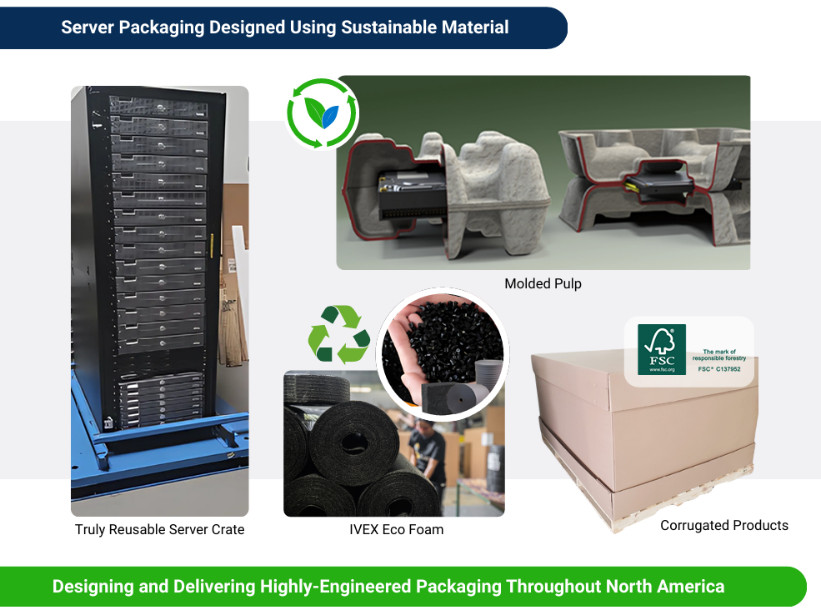
Corrugated Fiberboard
Corrugated fiberboard is widely accepted in curbside and industrial recycling programs. It is lightweight, cost-effective, and highly customizable. For lighter servers, cabling kits, and internal components, it performs well.
However, corrugated has limitations under heavy load and can be vulnerable to moisture and compression. For larger equipment or multi-use systems, reinforcement or pairing with other materials may be required. While recyclable, corrugated material may not withstand repeated cycles without degrading.
Molded Pulp
Molded pulp is produced from recycled paper and is often compostable and recyclable. It provides effective cushioning for smaller components and internal dunnage.
Its structural strength is limited for heavy equipment. Dimensional precision can also vary compared to engineered plastics. Molded pulp plays a valuable role in circular packaging, but typically as a secondary or cushioning element rather than a primary structural substrate.
Expanded Polypropylene
Expanded polypropylene offers excellent durability and impact resistance. It is lightweight and suitable for a precision-molded interior fit. In returnable systems, EPP can withstand multiple shipping cycles.
Although technically recyclable, EPP often requires take-back programs or specialized recyclers. Without a closed-loop infrastructure, it may not meet circularity objectives. When integrated into managed recovery systems, however, it becomes a strong performer in reusable packaging strategies.
Rigid Plastics such as HDPE, PP, and PET
Rigid plastics provide strength, moisture resistance, and structural reliability. They are commonly used in pallets, totes, and custom crates. Many are recyclable within industrial streams, depending on resin type.
They can be heavier than fiber alternatives and must be tracked and processed post-use to ensure sustainability claims are met. In circular systems with defined recovery pathways, rigid plastics can support long-term reuse and refurbishment.
Designing for Real World Circularity
One of the most overlooked aspects of substrate selection is local recycling infrastructure. A material that is recyclable in theory may still be landfilled if there is no nearby facility capable of processing it.
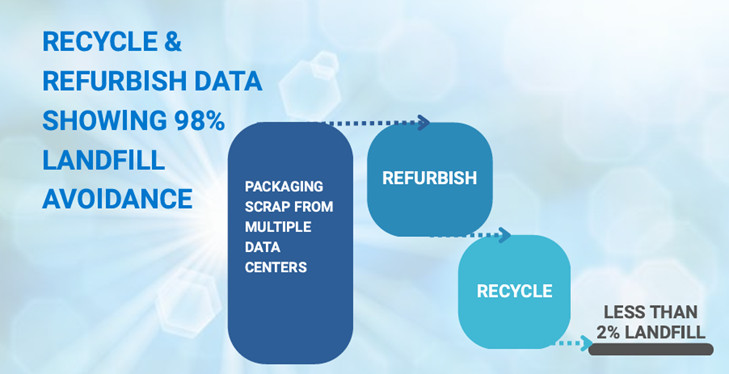
Before specifying substrates, packaging teams should evaluate recycling capabilities at the destination, consult with waste management partners, and include clear labeling to reduce contamination.
Circular packaging design should follow three guiding principles:
- Minimize mixed materials to simplify separation and recovery.
- Maintain structural integrity to meet stacking and load requirements for heavy equipment.
- Design for second-life opportunities, including reuse, refurbishment, and reprocessing.
Circularity is not achieved by material choice alone. It requires system alignment.
How SPG Is Positioned to Lead in Circular Data Center Packaging
SPG is uniquely positioned in the data center packaging circularity space because we approach substrate selection as part of an engineered system rather than an isolated decision.
Choosing recyclable substrates for data center packaging is not a one-size-fits-all exercise. It requires balancing performance, cost, and recovery realities within a complex global supply chain. Circularity reframes substrate selection as a strategic decision. The right material, supported by the right system, protects sensitive equipment while also safeguarding ESG commitments and long-term operational resilience.
At SPG, we engineer packaging systems that support both performance and circular economy objectives. When substrates are selected intentionally and supported by recovery infrastructure, packaging becomes more than protective. It becomes a measurable contributor to sustainability leadership.